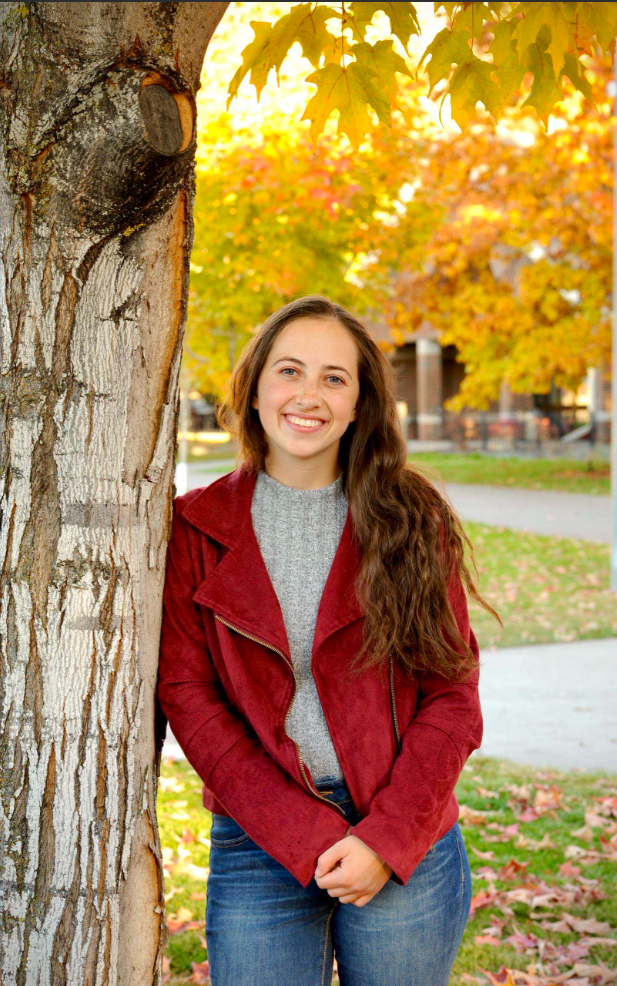
When undergraduate students consider the path to medical school, they often focus on a rigid checklist: maintain flawless grades, study for the MCAT, and volunteer. But for recent University of Montana graduate Hunter Grimes, the secret weapon that unlocked her acceptance into one of the country’s most competitive medical programs wasn’t just a checklist—it was treating her time at UM as a longitudinal test drive for her passions.
Hunter graduated from UM in 2022 with a B.S. in Microbiology, a minor in Biochemistry, and an honors designation from the Davidson Honors College. Today, she is completing her clinical rotations as a second-year medical student at the prestigious Duke University School of Medicine in Durham, North Carolina.
Her transition from Missoula to an elite national institution was built directly upon the multi-layered, immersive experiential learning opportunities she pursued right here in Griz Country.
The Strategy: Stacking Long-Term Lab Science and Rare Teaching Roles
An elite medical application requires proof of sustained, long-term commitment. Hunter achieved this by diving deep into two highly technical environments on campus: molecular virology and human anatomy.
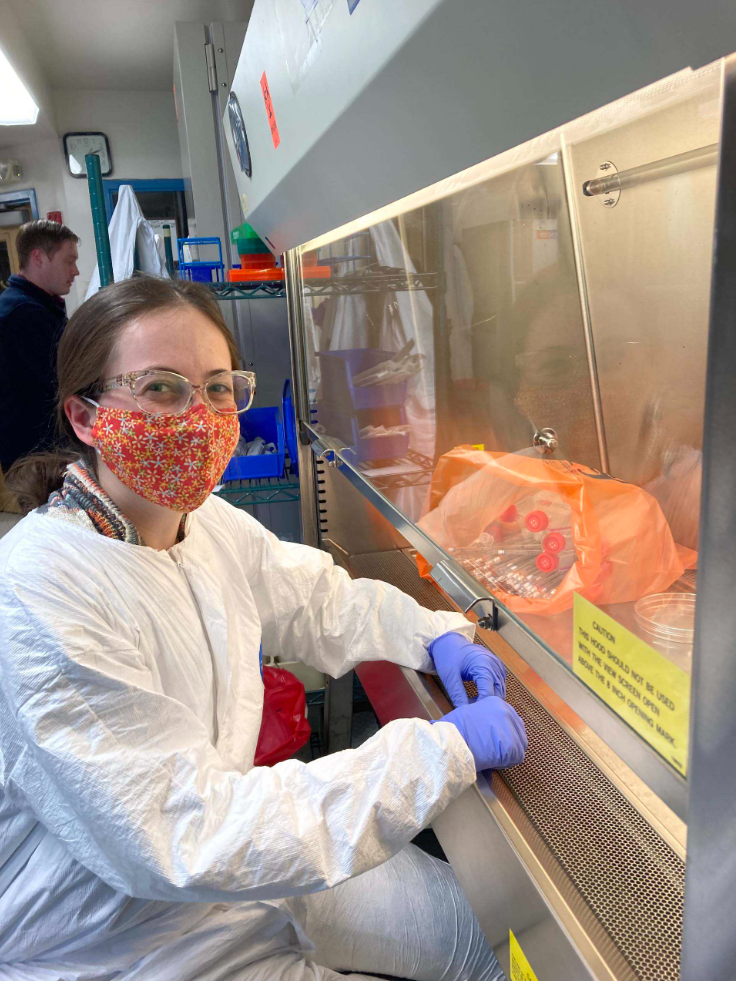
- Longitudinal Virology Research: During her sophomore year, Hunter joined the Lodmell Lab, which focuses on molecular virology and how human cells respond to viral infections. Guided by her mentor, Dr. Steve Lodmell, and graduate student Luke White, Hunter didn’t just wash beakers; she was given the autonomy of a graduate researcher. Her work culminated in a summer internship with UM’s Center for Translational Medicine, where she spearhead an independent project tracking viral protein interactions. This project doubled as her Honors Senior Thesis, earned her a co-author credit on a peer-reviewed publication, and took her to national conferences in San Diego to present her findings.
Dr. Lodmell was always supportive of my goals and encouraged me to ‘push back the frontiers of science’ as a researcher,” Hunter says. “My independent project gave me a chance to see what a career in academic research actually looks like, from writing proposals to designing protocols.
- Frontline Anatomy and Cadaver Dissection: While many universities restrict human dissection to graduate students, UM offers a rare undergraduate opportunity. During her senior year, Hunter served as a Teaching Assistant in the Anatomy and Physiology Cadaver Lab. She worked in teams to dissect and prepare human cadavers, then spent her weeks teaching the material to pre-health underclassmen. The experience unlocked an entirely new career passion: a profound love for human anatomy and peer-to-peer mentorship.
The Pivot: Using Research to Choose MD over PhD
Though Hunter loved her three years in the virology lab, the experience provided a critical realization that classroom lectures never could: she wanted to interact directly with patients rather than spending her life exclusively in an academic research lab.
Instead of a detour, her years of research became the centerpiece of her medical school interviews.
Ultimately, my research experience was one of the greatest strengths of my medical school application,” Hunter notes. “I was able to talk about how I adjusted to and overcame failed experiments, how my skills grew over time, and how I was able to gain independence.
Furthermore, Hunter didn’t abandon her non-scientific passions to fit a rigid mold. She spent her time at UM heavily involved in the music program, playing in both the Grizzly Marching Band and Pep Band—an unconventional pre-med milestone that interviewers at top-tier medical schools asked about constantly.
The Next Chapter: Bringing Duke Expertise Back to Montana
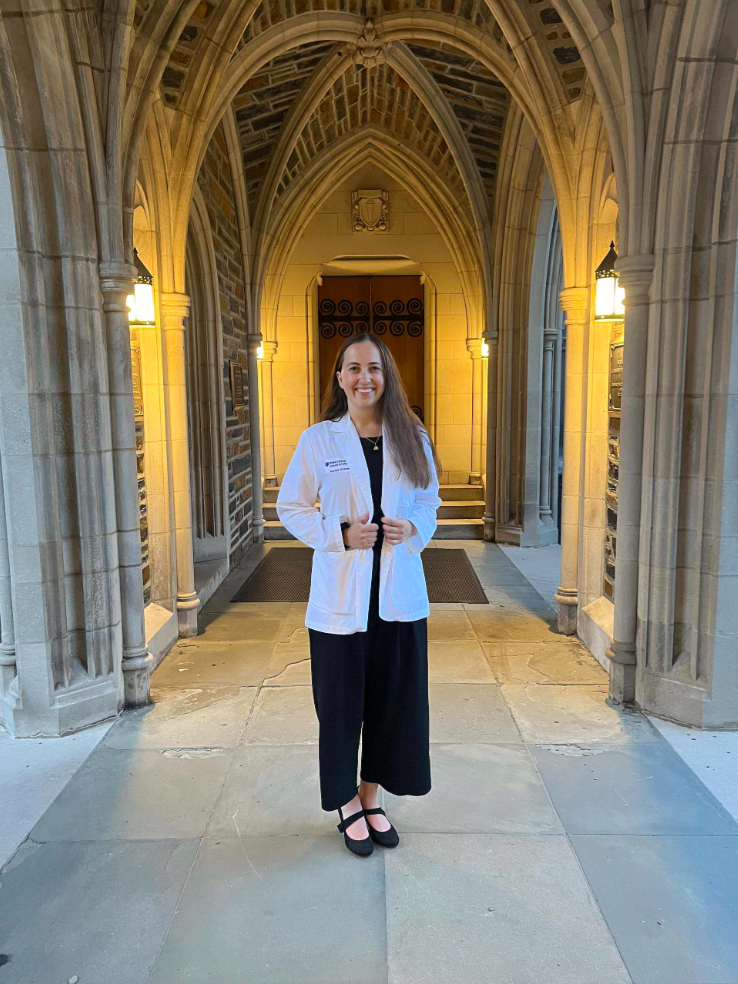
At Duke Med, Hunter is already stepping back into the leadership roles she mastered at UM. She co-created an anatomy research project that was recently presented at a national conference hosted by the Mayo Clinic, and she is slated to become a TA for Duke’s first-year medical anatomy lab this fall. Influenced by her time as a UM Advocate and Davidson Honors College Ambassador, she also coordinates recruitment events for incoming Duke medical students.
Without all the hands-on experiences and support from mentors at UM, I’m not sure if I would have been able to get into medical school, let alone a top school like Duke,” Hunter says. “While I am still deciding what medical specialty I will apply to, I look forward to bringing all that I learn at Duke back to the Montana communities that shaped who I am today.
Career Lessons from Hunter’s Journey
- Don’t just build a resume; build a story. Hunter’s time in the Grizzly Marching Band proved to interviewers that she was a well-rounded individual with diverse interests. Pursue things you genuinely love, not just what “looks good.”
- Failures are your best interview answers. Medical school and corporate interviewers don’t want to hear about perfect processes. Hunter used her failed lab experiments to prove her adaptability, resilience, and problem-solving skills under pressure.
- Test-drive your track early. Hunter used a 3-year lab placement to intentionally weigh a PhD path against an MD track. Ruling out or refining your career trajectory early saves years of academic misalignment.

Take Action on Your Career Journey
- Explore Undergraduate Research: Connect with the Office of Undergraduate Research to find multi-year lab placements in microbiology, biochemistry, and biomedical sciences.
- Apply for Specialized Campus Roles: Look into positions like the Anatomy and Physiology TA program or campus leadership networks like UM Advocates to build high-level communication competencies.
- Check Out Career Paths in Health: Check out our Virtual Career Hub to search for micro-internships, regional fellowships, and opportunities in healthcare.
- Participate in Experiential Learning: Learn how to earn credit for internships or take part in hands-on projects through our Virtual Career Hub’s “How Do I…?” sections.
- Map Your Competencies: Connect with an ELCS Career Coach to learn how your lab data, publications, and unique extracurriculars (like music and arts) into a high-caliber graduate school resume.
- Stand out in graduate school interviews? Schedule a mock interview or resume-mapping session with an ELCS Career Coach to find your own unique talking points.
